


Water has always had a quiet kind of power. It flows through every part of our lives—our kitchens, our showers, our farms, our industries. Yet most of us rarely stop to think about the systems working behind the scenes to make that water safe. Turn the tap and it’s simply there. Reliable. Clear. Ordinary.
But the truth is, clean water doesn’t just happen. It’s the result of science, infrastructure, and a lot of thoughtful planning.
Over the last decade, the challenges around water quality have become more complicated. Aging infrastructure, population growth, and environmental stress are all putting pressure on traditional treatment methods. That’s why many municipalities, businesses, and even residential communities are now turning toward advanced water treatment systems that go beyond the basics.
And honestly, it’s not just about cleaner water anymore. It’s about smarter water.
The Growing Complexity of Water Quality
If you look back fifty years, water treatment was relatively straightforward. Remove sediments, disinfect pathogens, maybe filter out some minerals. Job done.
Today? It’s not so simple.
Modern water sources can contain trace pharmaceuticals, industrial chemicals, agricultural runoff, heavy metals, and microplastics. These contaminants are often invisible, and in many cases, traditional treatment technologies weren’t designed to deal with them.
That’s where innovation steps in.
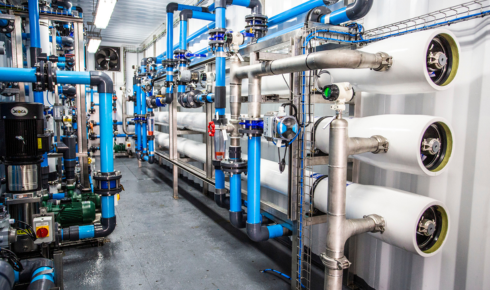
Membrane filtration, UV disinfection, advanced oxidation processes, and smart monitoring technologies are transforming how water is purified. These methods don’t just treat water—they analyze it, adapt to it, and continuously improve performance.
It’s a little like upgrading from a flip phone to a smartphone. The function is similar, but the capability is worlds apart.
Technology That Thinks Ahead
One of the most interesting things happening in water treatment today is the integration of data and automation.
Sensors now monitor water quality in real time. Systems can adjust chemical dosing automatically. Remote monitoring allows operators to detect potential issues before they become serious problems.
Instead of reacting to contamination after it appears, modern systems predict and prevent it.
That shift—from reactive to proactive—is huge.
And it’s not just about safety. Smart treatment systems also help conserve energy and reduce waste. Many facilities report significant cost savings simply because the technology allows them to optimize operations in ways that weren’t possible before.
In other words, cleaner water and better efficiency can actually go hand in hand.
Why One-Size-Fits-All No Longer Works
Here’s the thing about water: it’s different everywhere.
The mineral content in Arizona looks nothing like the water profile in coastal Florida. Agricultural regions may struggle with nitrates, while industrial zones might face chemical contamination. Even neighboring towns can have entirely different water chemistry.
That’s why the idea of standardized treatment is slowly fading.
Instead, engineers and water specialists are increasingly designing customized solutions tailored to the exact conditions of a water source. These solutions take into account local contaminants, infrastructure limitations, population demand, and even climate patterns.
It’s a more thoughtful approach, really.
Rather than forcing water to fit the system, the system is designed to fit the water.
And when you think about it, that just makes sense.
The Role of Communities in Water Management
While technology plays a major role in water treatment, community involvement remains just as important.
Local governments, water utilities, and residents all share responsibility for maintaining water quality. Infrastructure upgrades, conservation initiatives, and educational programs often work best when communities actively participate in them.
That’s where community water services come into the picture.
These programs often focus on improving access, maintaining infrastructure, and educating residents about responsible water use. They may include well water testing, filtration support for rural households, or municipal partnerships designed to modernize aging treatment plants.
Sometimes the biggest improvements come not from massive technological leaps, but from steady cooperation between local stakeholders.
Clean water, after all, is a shared resource.
Sustainability and the Future of Water Treatment
Another major shift in the industry involves sustainability. Traditional treatment processes can be energy-intensive, and waste disposal has always been a concern.
Newer systems aim to minimize both.
Many facilities are experimenting with energy-efficient filtration, water reuse technologies, and waste recovery processes. Some plants even convert treatment byproducts into usable resources like fertilizer or renewable energy.
It’s a fascinating evolution.
Instead of seeing wastewater as a problem, engineers increasingly view it as a resource waiting to be recovered.
This mindset—treating water as part of a circular system rather than a disposable one—may ultimately reshape how cities manage water in the decades ahead.
Why Reliable Water Systems Matter More Than Ever
It’s easy to overlook water infrastructure when everything works properly. But when systems fail—whether through contamination, drought, or outdated technology—the consequences become immediately clear.
Safe water supports public health, economic development, agriculture, and daily life. Without it, communities struggle to grow and industries cannot function efficiently.
That’s why investment in smarter treatment technologies continues to rise across the world. Governments, private companies, and local utilities are recognizing that water security is not just an environmental concern; it’s an economic one too.
In a way, water treatment is like the foundation of a house. Most people never see it, but everything depends on it.
A Future Built on Better Water
If there’s one lesson the modern water industry keeps teaching us, it’s this: adaptability matters.
Water challenges will keep evolving—new contaminants, changing climates, growing populations. Static systems simply won’t keep up.
But flexible, intelligent treatment approaches? Those stand a chance.
By combining technology, local knowledge, and responsible planning, communities can build water systems that are resilient enough to handle the future.
And that future, ideally, looks something like this: clean water flowing freely, infrastructure working quietly in the background, and people confident that the most essential resource on Earth is being managed with care.
Simple, perhaps. But incredibly important.