
Key Points
Most homeowners have a few household frustrations they simply learn to live with. Towels that never feel quite soft, a kettle that develops a chalky coating, or faucets that need cleaning again almost as soon as they’ve been polished. Individually, these things don’t seem like a big deal. Over time, though, they can become annoying…
Most homeowners have a few household frustrations they simply learn to live with. Towels that never feel quite soft, a kettle that develops a chalky coating, or faucets that need cleaning again almost as soon as they’ve been polished. Individually, these things don’t seem like a big deal. Over time, though, they can become annoying enough to make you wonder whether something about your home’s water is working against you.
Hard water is one possible explanation. It contains higher concentrations of dissolved minerals, mainly calcium and magnesium. These minerals occur naturally in groundwater and can enter a home’s water supply depending on the local geology and source. Hard water isn’t usually considered a health risk at typical household levels, but it can affect cleaning, plumbing, and the performance of certain appliances.
Understanding what happens when these minerals build up can help you decide which everyday habits to change and when a water treatment system might be worth considering.
Why Laundry Sometimes Comes Out Feeling Different
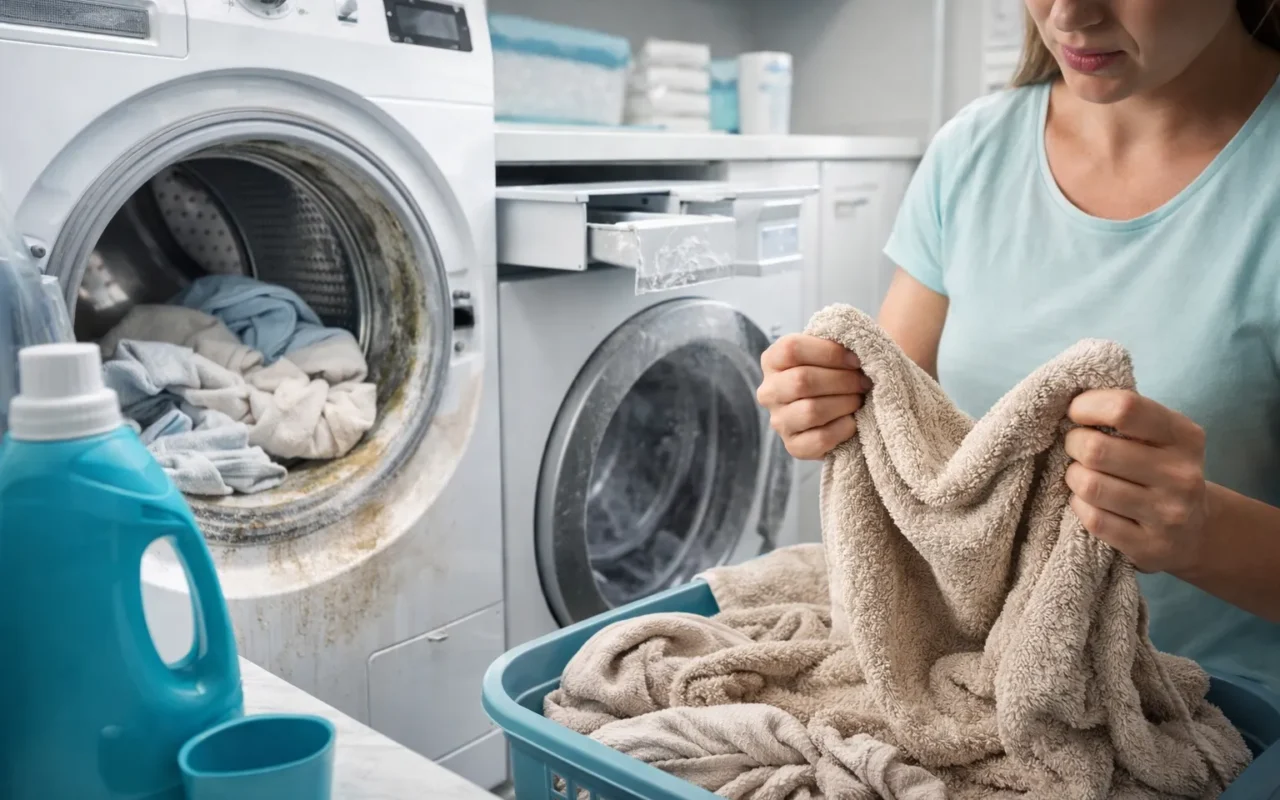
Laundry is often where people first notice the effects of hard water. You put on a fresh shirt expecting it to feel clean and comfortable, but the fabric seems rougher than it should. Towels lose their softness, and white clothes may gradually look less bright despite regular washing.
In some homes, stiff or dull laundry can be linked to the way hardness minerals interact with soap and detergent. Calcium and magnesium can interfere with cleaning products, making it harder for them to work as effectively. Mineral and detergent residues may remain on fabrics, particularly when the detergent amount, wash temperature, or rinse cycle isn’t suited to the conditions.
That doesn’t mean hard water is always responsible. Overloading the washing machine, using too much detergent, or choosing an unsuitable wash cycle can produce similar results. Fabric quality and the type of detergent matter, too.
A few adjustments may help. Follow the detergent manufacturer’s dosage instructions, avoid filling the drum beyond its recommended capacity, and clean the washing machine according to its manual. If your machine has a setting for water hardness or uses a specific detergent system, check the manufacturer’s guidance before changing anything.
If clothes continue to feel rough after these adjustments, testing the water’s hardness can help establish whether mineral content is contributing to the problem.
The Hidden Cost of Mineral Deposits in Appliances
Water-using appliances make everyday life easier, but many of them rely on heating water or moving it through narrow passages. When hard water is heated or allowed to evaporate repeatedly, minerals can gradually form scale on internal surfaces.
Kettles are a familiar example. A white or pale crust may appear around the heating element, even when the appliance is cleaned regularly. Coffee makers, dishwashers, washing machines, and water heaters can experience similar deposits, although the amount depends on water hardness, usage, temperature, and appliance design.
Over time, reduced appliance efficiency may become a concern when scale interferes with heat transfer or restricts water flow. A water heater, for instance, may need to work harder to transfer heat through a layer of deposits. Some appliances may also require more frequent cleaning or servicing.
Scale isn’t the only possible cause of poor performance, however. A dishwasher that leaves residue could have clogged spray arms, a dirty filter, or an incorrect rinse-aid setting. A water heater that struggles to provide hot water may have a mechanical or electrical fault. Before blaming hard water, rule out ordinary maintenance issues and follow the manufacturer’s recommendations.
Regular descaling can help where the appliance manual permits it. Use the recommended cleaning product, observe the correct procedure, and avoid harsh chemicals that could damage seals or metal components. For equipment that needs professional servicing, it’s usually better to get advice than to experiment with an unfamiliar cleaning method.
What Happens Inside Your Plumbing?
The most visible hard-water problems occur around taps and showerheads, but mineral deposits can also form in less accessible places. Small amounts of scale may accumulate over time, especially in areas where water is heated or evaporation is frequent.
The concern is mineral buildup inside plumbing systems, which can develop on internal surfaces and contribute to restricted flow in some circumstances. The extent of the problem depends on the plumbing material, water chemistry, temperature, and how long the deposits have been forming. Not every hard-water home will experience serious pipe restrictions, and scale should not automatically be blamed for every plumbing issue.
If a faucet’s flow becomes weaker, check for an aerator clogged with sediment or mineral deposits. A showerhead may also need cleaning. These accessible parts can sometimes be serviced without major work, provided you follow the manufacturer’s instructions and can remove them safely.
A widespread drop in water pressure deserves a closer look. It may be related to a plumbing leak, a partially closed valve, sediment, or another issue unrelated to hardness. A qualified plumber can investigate the cause and recommend appropriate repairs.
Preventive maintenance is generally easier than dealing with a major blockage. If your water is very hard and scale appears repeatedly, testing can help determine whether treatment could reduce future deposits.
Is a Water Softener Worth Considering?
For households where hardness is a persistent problem, a conventional water softener may be a practical option. Most salt-based systems use ion exchange to reduce calcium and magnesium, replacing them with sodium or potassium ions, depending on the system. This can limit scale formation and help soap work more effectively.
The right system depends on the measured hardness level, household water use, and the amount of water that needs treatment. A unit that is too small may regenerate frequently, while an oversized system may cost more than necessary. Installation space, drainage requirements, maintenance, and salt use should also be considered.
It’s worth remembering that softening and filtration are different processes. A softener addresses hardness; it doesn’t automatically remove bacteria, lead, or every other possible contaminant. If drinking-water safety is a concern, use appropriate testing and select treatment based on the results.
Before buying equipment, compare the total cost of ownership, including installation and ongoing supplies. Ask what the system is designed to do and how its performance will be checked. A good recommendation should be based on your water conditions, not simply on a promise that one product will solve every problem.
Start With the Water, Not the Guesswork
Hard water can make laundry less pleasant, contribute to scale in appliances, and create recurring cleaning chores. Yet the best response isn’t necessarily to replace equipment or install a complex treatment system straight away.
Begin with simple maintenance, check appliance instructions, and pay attention to where the problems appear. If the same issues keep returning across your home, a water hardness test can provide useful information. From there, you can decide whether a softener or another treatment approach makes sense.
The goal is straightforward: understand what’s happening, spend money where it can make a real difference, and choose a solution you can maintain over time. Sometimes a small change in routine is enough. In other homes, treating the water may offer longer-term benefits. Either way, a little knowledge can make household care feel less like an endless cycle of cleaning and repairs.
Related Posts
Better Water Throughout Your Home Starts With Understanding What’s in It
Water affects more parts of daily life than most people realize. It runs…
SR 02417
The Small Water Filter Maintenance Tasks That Make a Big Difference
It’s easy to forget about a water filtration system once it’s installed. You…
SR 02414
Making Water Treatment Easier: Testing, Maintenance, and Affordable Solutions for Your Home
Most homeowners don’t spend much time thinking about their water until something feels…
SR 02410