
Key Points
You clean your bathroom regularly, use quality laundry detergents, and take good care of your household appliances. Yet those stubborn white deposits keep appearing around faucets, your towels feel rough, and freshly washed glasses never seem completely spotless. Before spending more money on cleaning products, it might be worth investigating your water supply. Excessive water…
You clean your bathroom regularly, use quality laundry detergents, and take good care of your household appliances. Yet those stubborn white deposits keep appearing around faucets, your towels feel rough, and freshly washed glasses never seem completely spotless.
Before spending more money on cleaning products, it might be worth investigating your water supply.
Excessive water hardness can contribute to several frustrating household problems that homeowners often overlook. Fortunately, modern water softening technology offers a practical way to address these concerns.
For homeowners in Houston, Texas, understanding the signs of hard water and exploring suitable treatment equipment can help improve everyday convenience. However, purchasing a water softener should be an informed decision based on your property’s actual water conditions, household requirements, and financial priorities.
How to Determine Whether Your Home Needs Water Softening
Perhaps you’ve noticed mineral deposits around your showerhead or wondered why your soap doesn’t produce enough lather. These everyday experiences could indicate that your water contains elevated concentrations of calcium and magnesium.
So, do you need a softener if you’re constantly dealing with mineral deposits, rough laundry, and recurring scale-related appliance maintenance? The answer depends on your water hardness levels and how significantly these conditions affect your household.
Hardness minerals naturally occur in many water supplies. Although hard water isn’t generally considered a health hazard, it can create several practical maintenance challenges.
When hard water evaporates, minerals may remain behind as chalky deposits. Heating mineral-rich water can also encourage scale formation inside kettles, water heaters, and other appliances.
Some common indications that water softening deserves consideration include:
- Persistent white deposits around faucets and showerheads.
- Cloudy spots on freshly washed glassware.
- Difficulty producing a satisfactory soap lather.
- Towels and clothing that feel stiff after washing.
- Stubborn residue on shower doors and bathroom surfaces.
- Frequent scale-related appliance maintenance.
However, these symptoms alone don’t establish your actual hardness level.
Professional water testing provides a more reliable assessment and can help determine whether installing a water softener would offer meaningful benefits for your household.
Discover How Water Softening Improves Everyday Household Activities
One of the most appealing aspects of water softening is that its potential benefits extend beyond a single room. From the laundry room to the kitchen and bathroom, reducing excessive hardness can make several everyday responsibilities easier.
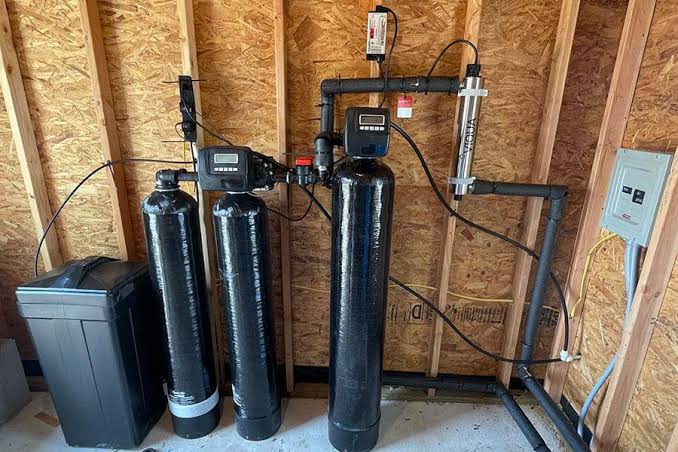
Modern softening systems for household water typically use ion-exchange technology to reduce calcium and magnesium concentrations before water travels through connected plumbing.
During treatment, specialized resin captures hardness minerals while releasing sodium or potassium ions. Periodic regeneration restores the resin’s treatment capacity, allowing the process to continue.
Imagine washing your favorite clothes without excessive mineral interference affecting detergent performance. You might notice that fabrics feel more pleasant after laundering.
Bathroom cleaning may also become less demanding when fewer hardness-related deposits accumulate around fixtures and glass surfaces.
Another practical advantage involves protecting household appliances. Mineral accumulation inside water heaters can interfere with heat transfer, while deposits within other equipment may increase maintenance requirements.
Appropriate water softening helps reduce future scale formation.
However, softened water isn’t the same as purified drinking water. Traditional softeners aren’t designed to remove every chemical contaminant, microorganism, or substance responsible for unpleasant tastes.
Additional filtration may be appropriate depending on your household’s water quality concerns.
Understanding these distinctions helps homeowners establish realistic expectations about what treatment equipment can accomplish.
Explore Different Water Softening Technologies Before Making a Purchase
Shopping for water treatment equipment can quickly become overwhelming. Different regeneration methods, equipment capacities, and operating features make it difficult to determine which system offers the best value.
Comparing available water softener options for homeowners allows families to evaluate equipment based on actual water conditions, daily consumption, installation requirements, and long-term maintenance expenses.
Traditional salt-based systems use ion exchange to reduce hardness minerals throughout connected household plumbing.
Timer-based models regenerate according to predetermined schedules, while demand-based systems initiate regeneration according to measured water consumption.
Demand-based operation can be particularly practical for households with changing consumption patterns.
For instance, your family may use considerably more water when relatives visit and much less while you’re away on vacation.
Some homeowners also explore salt-free water conditioners. Depending on their technology, these systems may help manage certain scale-related concerns without removing calcium and magnesium from the water.
It’s important not to confuse scale conditioning with actual hardness reduction.
When evaluating equipment, consider treatment capacity, water pressure, regeneration requirements, salt consumption, warranty coverage, and servicing expenses.
A knowledgeable water treatment professional can help explain the differences between available technologies and recommend solutions suited to your Houston home.
The most appropriate equipment isn’t necessarily the most expensive model. It’s the system that effectively addresses your needs while remaining practical to maintain.
Why Proper Equipment Sizing Matters
Choosing a water softener that matches your household’s consumption is essential for dependable performance.
An undersized system may require excessively frequent regeneration or fail to provide sufficient treatment capacity during periods of high demand.
Conversely, unnecessarily large equipment may increase upfront purchasing costs without providing meaningful additional benefits.
Household size, existing hardness levels, peak water demand, and plumbing characteristics should all influence equipment selection.
Professional sizing helps balance treatment effectiveness with manageable salt and water consumption.
Before purchasing equipment, request a clear explanation of how the recommended system meets your property’s requirements.
Understand the Long-Term Financial Value of Water Softening
Installing a water softener represents an initial financial commitment, but its potential advantages should also be considered over time.
Reducing hardness may help decrease certain cleaning product requirements and scale-related appliance maintenance expenses.
However, homeowners must also account for salt purchases, regeneration water consumption, periodic servicing, and eventual component replacements.
Actual savings vary considerably between households.
Comparing anticipated operating expenses with the potential benefits of hardness reduction can help you determine whether water softening represents a worthwhile investment.
Maintain Your Water Softener for Consistent Results
Even high-quality water treatment equipment requires routine care.
Monitor salt levels, follow manufacturer maintenance recommendations, and periodically verify treatment effectiveness.
If mineral deposits begin returning or water flow changes unexpectedly, arrange a professional inspection.
Maintaining simple service records can help you anticipate ongoing expenses and preserve dependable equipment performance.
Make the Right Water Treatment Decision for Your Houston Home
Living with stubborn mineral deposits and frustrating cleaning challenges doesn’t have to become a permanent part of homeownership.
Start by understanding your water hardness, evaluating your household’s needs, and comparing suitable treatment technologies.
For Houston homeowners, an appropriately selected and professionally installed water softener can bring practical improvements to everyday living.
Ultimately, the decision comes down to finding a solution that respects your budget, protects valuable household equipment, and makes daily routines more convenient. With the right information, you can invest confidently in better water for your home.
Related Posts
Creating a More Comfortable Home With the Right Water Treatment and Filtration System
Water is one of those things we tend to take for granted. Turn…
SR 02434
How Hard Water Can Affect Your Laundry, Appliances, and Plumbing
Most homeowners have a few household frustrations they simply learn to live with.…
SR 02420
Better Water Throughout Your Home Starts With Understanding What’s in It
Water affects more parts of daily life than most people realize. It runs…
SR 02417