
Key Points
There’s something disappointing about making a fresh pot of coffee only to realize that the water gives it an unpleasant aftertaste. Maybe you’ve noticed something similar when filling your reusable water bottle or preparing a glass of lemonade. Water quality can influence everyday experiences more than we sometimes realize. For households looking to improve their…
There’s something disappointing about making a fresh pot of coffee only to realize that the water gives it an unpleasant aftertaste. Maybe you’ve noticed something similar when filling your reusable water bottle or preparing a glass of lemonade. Water quality can influence everyday experiences more than we sometimes realize.
For households looking to improve their drinking water, reverse osmosis drinking water systems offer a practical treatment option capable of reducing a range of dissolved substances.
But is reverse osmosis really necessary for every home? Not necessarily. Understanding how the technology works, what it removes, and what maintaining the equipment involves can help you make a decision that’s genuinely worthwhile.
After all, better drinking water should bring convenience into your life rather than another complicated household responsibility.
How Reverse Osmosis Actually Works
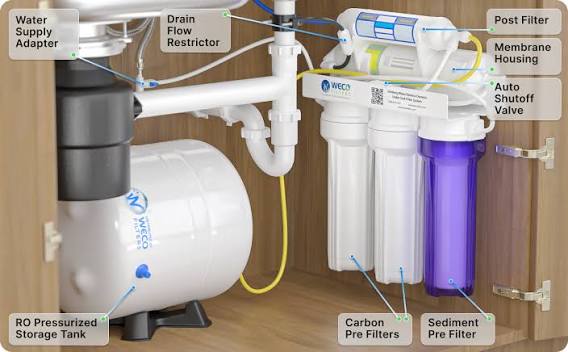
Reverse osmosis, often shortened to RO, uses water pressure to move water through a specialized semipermeable membrane. This membrane allows water molecules to pass through while rejecting many dissolved substances.
Most residential units also include additional filtration stages. Sediment filters capture suspended particles, while carbon filters may reduce chlorine and certain other substances that could affect water taste or membrane performance.
The treated water becomes available for drinking and cooking, while a separate stream carries rejected substances toward the drain.
It sounds rather technical, but the equipment generally operates quietly in the background.
Depending on the system’s design and certification, reverse osmosis can reduce substances such as lead, fluoride, nitrate, and dissolved salts.
However, not every model provides identical treatment performance. Checking independently verified contaminant reduction claims is more important than simply counting the number of filtration stages.
Making Better Use of the Space Beneath Your Kitchen Sink
One reason reverse osmosis appeals to homeowners is that it doesn’t necessarily require extensive plumbing modifications throughout the property.
Installing under-sink reverse osmosis filtration allows households to treat water directly where it’s most commonly used for drinking, cooking, and preparing beverages.
These systems typically connect to the cold water supply and deliver treated water through a dedicated faucet.
Traditional models often include a storage tank, while certain newer designs operate without one.
Before purchasing equipment, take a look inside your kitchen cabinet. Between cleaning supplies, plumbing connections, and household storage, there might be less available space than you initially imagined.
Water pressure, drainage access, and electrical requirements for powered models also deserve consideration.
A suitable installation should provide convenient access for future filter changes without making everyday kitchen activities more difficult.
Why Water Testing Should Guide Your Treatment Decisions
It’s easy to become attracted to filtration products promising exceptionally clean water. However, understanding your original water conditions provides a much more reliable foundation for choosing equipment.
Effective home drinking water purification begins with identifying the substances that need attention and selecting treatment methods capable of reducing them.
Municipal water customers can review their utility’s drinking water quality reports. Appropriate laboratory testing can provide additional information about concerns specific to individual properties.
Private well owners should be particularly mindful of regular testing because their water supply may require different treatment measures.
Remember that water can look perfectly clear while containing unwanted substances. Likewise, an unfamiliar taste doesn’t automatically indicate a serious health concern.
Rather than purchasing equipment based on advertising claims alone, establish what your household water actually needs.
The Everyday Advantages of Reverse Osmosis Water
For many homeowners, the most noticeable improvement is simply how their drinking water tastes.
Reducing certain dissolved substances and addressing unpleasant tastes through combined filtration stages may make water more enjoyable.
Coffee, tea, and homemade beverages can also taste different when prepared with treated water. Of course, individual preferences vary considerably.
Having filtered water readily available may encourage household members to refill reusable bottles instead of repeatedly purchasing bottled water.
There’s a practical convenience here that’s easy to appreciate. You don’t have to carry heavy packages home from the grocery store or find extra space to store them.
However, reverse osmosis isn’t automatically more economical or environmentally friendly in every situation. Equipment costs, replacement filters, and wastewater production should also be considered.
Understanding What Reverse Osmosis Cannot Do
While reverse osmosis is a useful treatment technology, it isn’t a universal answer to every water quality problem.
The process removes many naturally occurring minerals along with targeted dissolved substances. Some homeowners prefer the resulting taste, while others choose equipment with a remineralization stage.
Additionally, standard residential units shouldn’t automatically be relied upon to make microbiologically unsafe water suitable for drinking.
Contaminated water sources may require appropriate disinfection, pretreatment, or additional specialized equipment.
Reverse osmosis also produces a reject water stream. Efficiency varies between models, making water consumption another important consideration when comparing products.
Understanding these limitations isn’t a reason to dismiss the technology. It simply helps establish realistic expectations before making an investment.
Keeping Your Filtration System Working Properly
Installing filtration equipment is only the beginning. Regular maintenance helps preserve treatment performance and water quality.
Sediment and carbon filters require periodic replacement, while the membrane has its own recommended service interval.
Follow manufacturer instructions, keep track of replacement dates, and arrange appropriate system sanitation when required.
Unexpected changes in water flow or taste deserve investigation. Periodic testing can also help verify performance when the system addresses specific contaminants.
Making Better Drinking Water Part of Everyday Life
Reverse osmosis can be a worthwhile investment when it addresses genuine household water quality concerns.
Start with reliable testing, compare certified equipment, and consider the ongoing responsibilities of system ownership.
The right treatment should fit comfortably into your daily routine.
Sometimes, the most satisfying household improvements are surprisingly ordinary, like filling a glass at the kitchen sink and genuinely enjoying the water you’re about to drink.
Related Posts
Creating a More Comfortable Home With the Right Water Treatment and Filtration System
Water is one of those things we tend to take for granted. Turn…
SR 02434
Is a Water Softener Right for Your Houston Home? Everything Homeowners Should Know
You clean your bathroom regularly, use quality laundry detergents, and take good care…
SR 02431
How Hard Water Can Affect Your Laundry, Appliances, and Plumbing
Most homeowners have a few household frustrations they simply learn to live with.…
SR 02420